Think about the last time someone in your workplace had an accident. Did anyone around them know what to do? If the honest answer is no, that is exactly why emergency first aid training matters so much.
Every workplace in the UK has a legal duty to ensure that proper first aid cover is in place. But beyond the legal requirement, knowing how to respond in an emergency could be the difference between someone walking away from an accident or not. In this blog, we are going to walk you through every key skill you gain from emergency first aid training, who needs it, how the course works, and why it is one of the most valuable qualifications any worker can hold.
What Is Emergency First Aid Training?
Emergency first aid training, officially known as the Emergency First Aid at Work (EFAW) course, is a one-day, Level 3 qualification approved by the Health and Safety Executive (HSE). It is designed to train workers to deal with the most common and serious workplace emergencies quickly, calmly, and correctly.
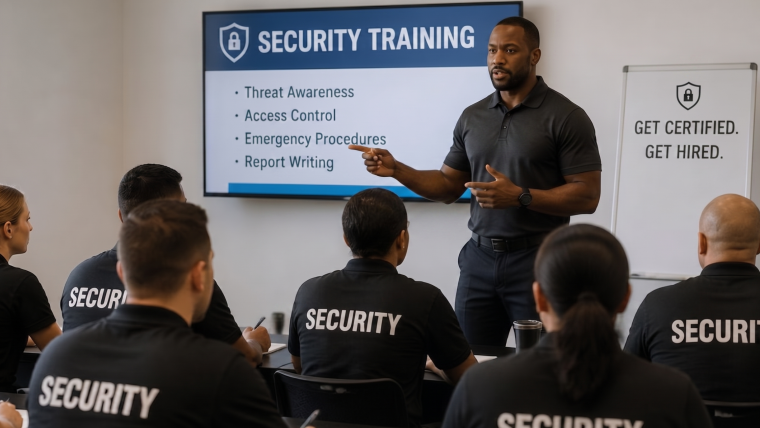
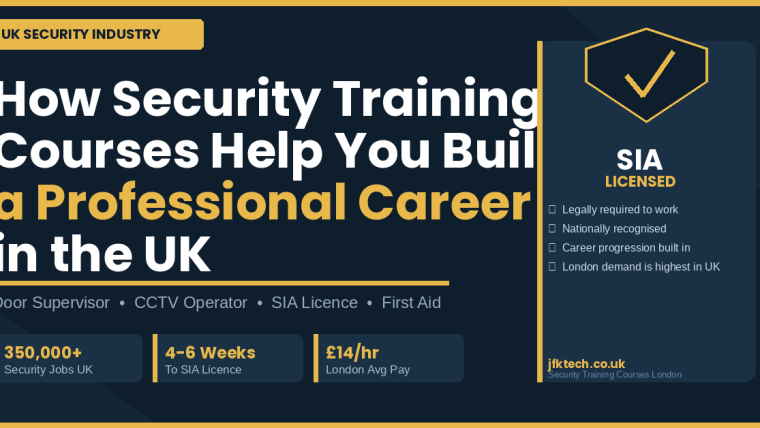
The course is ideal for low-risk workplaces such as offices, retail, hospitality, gyms, and small businesses. It is also a legal requirement for security professionals; anyone applying for an SIA door supervisor or security guard license must hold a valid first aid certificate before starting their training.
For higher-risk environments like construction sites, a longer First Aid at Work course may be more appropriate, but the EFAW course gives every worker a strong, practical foundation in emergency response.
Your EFAW certificate is valid for three years. After that, you need to retake the course to renew it.
Read More: What Has Actually Changed in First Aid and CPR Training for 2026?
Who Should Take an Emergency First Aid at Work Course?
Emergency first aid training is suitable for:
- Workers in low-risk environments who are the designated first aider for their workplace
- Security professionals and SIA Door Supervisors who need a valid first aid certificate before training
- Construction workers who want a solid grounding in emergency response
- Teachers, retail staff, gym instructors, hospitality workers, and office employees
- Self-employed individuals who want to be prepared for on-site emergencies
- Employers looking to meet their legal duties under the Health and Safety (First Aid) Regulations 1981
- Anyone who simply wants to have the confidence and skills to help in an emergency
You do not need any previous experience or qualifications to attend. The course is designed to be accessible to everyone.
Read More: First Aid at Work Training: A Business Priority
What Skills Do You Learn in Emergency First Aid Training?
This is the most important question, and the answer is more practical and useful than most people expect. Here is a full breakdown of every skill the EFAW course teaches:
Skill 1 — How to Assess an Emergency Situation Safely
Before you do anything else in a first aid emergency, you need to assess the scene. The course teaches you the DRS ABC approach:
- D Danger: Is the scene safe? Could you become a casualty too?
- R Response: Is the casualty conscious and responsive?
- S Send for help: Call 999 or ask someone else to call
- A Airway: Is the airway open and clear?
- B Breathing: Is the casualty breathing normally?
- C Circulation: Are there signs of serious bleeding?
This structured approach stops people from panicking and helps them take control of a situation calmly and effectively.
Skill 2 — CPR (Cardiopulmonary Resuscitation)
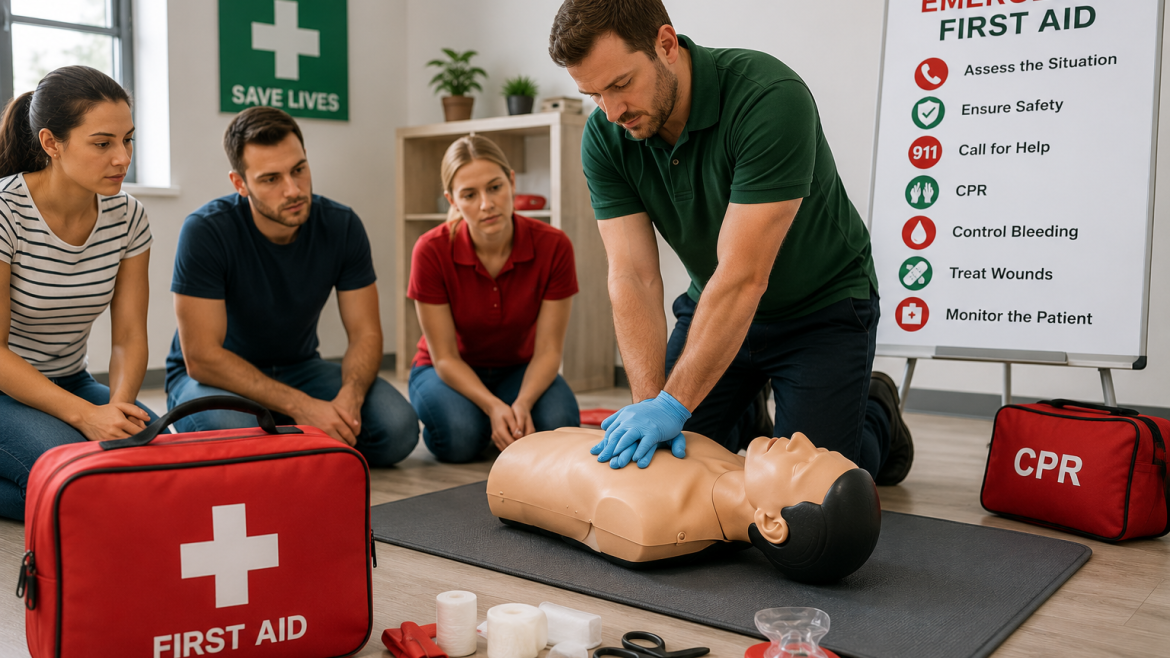
CPR is one of the most important life-saving skills in the world, and emergency first aid training teaches you exactly how to do it correctly.
You will learn:
- How to check if a casualty is breathing and responsive
- How to perform chest compressions at the right depth and rate
- How to give rescue breaths using a face shield or pocket mask
- The correct ratio of compressions to rescue breaths
- How long to continue CPR until help arrives
CPR techniques taught in this course follow the UK Resuscitation Council guidelines, which are updated regularly to reflect the latest best practice.
Skill 3 — How to Use an Automated External Defibrillator (AED)
Many people have never used an AED and find the idea of it intimidating. The EFAW course takes away that fear completely.
You will learn:
- What an AED is and how it works
- How to switch it on and follow the voice instructions
- When to use it and when not to
- How to use it safely while CPR is being carried out
- What happens after the AED delivers a shock
AEDs are becoming increasingly common in workplaces, shopping centers, and public spaces across the UK. Knowing how to use one gives you an enormous advantage in a cardiac arrest situation.
Skill 4 — How to Put Someone in the Recovery Position
If a casualty is unconscious but breathing, they must not be left flat on their back. The risk is that their airway can become blocked, which can be fatal.
On the course, you will practice the recovery position hands-on. You will learn how to:
- Check if the casualty is breathing normally
- Roll them safely into the correct position
- Keep the airway open and monitor them until help arrives
- Adjust the position for pregnant casualties or those with suspected spinal injuries
This is a simple skill that everyone should know, and it saves lives in situations that do not even involve a cardiac arrest.
Skill 5 — How to Help a Choking Casualty
Choking is one of the most common and frightening emergencies a first aider will face. Speed matters enormously. The EFAW course teaches you:
- How to recognise the signs that someone is choking
- When to encourage coughing versus when to step in
- How to deliver back blows correctly
- How to perform abdominal thrusts (Heimlich manoeuvre)
- What to do if the casualty loses consciousness
- Differences in technique for adults
You will practice these techniques during the course so that if you ever face a real choking emergency, you will respond instinctively and correctly.
Skill 6 — How to Control Bleeding and Treat Shock
Uncontrolled bleeding is a leading cause of preventable death in workplace accidents. Emergency first aid training covers:
- How to apply direct pressure to a wound to stop bleeding
- How to use bandages and dressings correctly
- How to treat life-threatening bleeding, including the use of wound packing and improvised tourniquets
- How to recognise the signs of shock (pale skin, rapid breathing, confusion, weakness)
- How to treat a casualty for shock and keep them stable until the ambulance arrives
From May 2026, first aid courses in the UK now include updated guidance on controlling catastrophic bleeding, reflecting current best practice from the Resuscitation Council UK.
Read More: First Aid Skills Every Construction Worker in the UK Should Know
Skill 7 — How to Treat Burns and Scalds
Burns are common in workplaces, particularly in construction, hospitality, and manufacturing. The EFAW course teaches you:
- How to classify a burn by severity
- The correct first aid for minor and serious burns (cool running water for at least 20 minutes)
- What you should never do to a burn (do not apply cream, butter, or ice)
- When to call 999 and when a burn can be managed on-site
- How to manage chemical and electrical burns differently from heat burns
Skill 8 — How to Recognise and Respond to a Seizure
Many people freeze when they see someone having a seizure because they do not know what to do. This part of the training gives you the confidence to act. You will learn:
- How to recognise the different types of seizures
- What to do and what NOT to do during a seizure (never restrain or put anything in their mouth)
- How to time the seizure and when to call 999
- How to keep the casualty safe after the seizure ends
- When seizures become a medical emergency
Skill 9 — How to Recognise a Heart Attack and Stroke
Not all emergencies involve a physical injury. The EFAW course also teaches you to recognize the warning signs of serious medical conditions:
Heart Attack signs: chest pain, pain spreading to the arm or jaw, shortness of breath, sweating, nausea
Stroke signs: using the FAST test, Face drooping, Arm weakness, Speech difficulty, Time to call 999
Early recognition of these conditions and calling for help quickly is what saves lives. Emergency first aid training makes sure you never miss those signs.
Skill 10 — How to Treat Minor Injuries
Not every first aid situation is life-threatening. The course also covers everyday workplace injuries:
- Small cuts, grazes, and abrasions: how to clean and dress a wound
- Minor burns and scalds
- Splinters and embedded objects: what to remove and what to leave alone
- Nosebleeds, the correct technique (lean forward, not back)
- Eye injuries and how to rinse the eye safely
- Sprains and strains: when to apply RICE (Rest, Ice, Compression, Elevation)
Skill 11 — Incident Management and Record Keeping
A first aider’s job does not end when the emergency is over. You also need to know how to:
- Complete an accident report correctly
- Record details of what happened, what treatment was given, and when
- Communicate clearly with emergency services when you call for help
- Manage bystanders and keep the area safe
- Carry out a handover to paramedics when they arrive
Good record keeping is a legal requirement and protects both the casualty and the first aider.
EFAW vs First Aid at Work—What Is the Difference?
| Time Period | Emergency First Aid at Work (EFAW) | First Aid at Work (FAW) |
| Duration | 1 day | 3 days |
| Who it’s for | Low-risk workplaces | Higher-risk workplaces (construction, manufacturing) |
| What it covers | Life-threatening emergencies | Life-threatening + a wider range of injuries |
| Certificate validity | 3 years | 3 years |
| HSE-compliant | Yes | Yes |
If you work in construction, you may need the full First Aid at Work qualification. If you work in a lower-risk environment, the EFAW course meets your legal requirements and gives you all the core emergency skills you need.
Read More: First Aid Training for Construction Sites and Meeting the 2026 HSE Compliance Standards
Why Emergency First Aid Training Matters for Your Career
Emergency first aid training is not just about ticking a compliance box. It adds genuine value to your career in a number of ways:
It is required for SIA licenses. Since 2021, anyone applying for a door supervisor or security guard license must hold a valid first aid certificate. Without it, you cannot begin your SIA training.
It is valued by construction employers. Site managers and contractors look for workers who hold recognized safety qualifications. Holding a first aid certificate alongside your CSCS card or SMSTS qualification makes you a much stronger candidate.
It builds real confidence. Many people know they should act in an emergency but freeze because they do not know how. This course removes that uncertainty.
It is transferable. Your EFAW certificate is useful at work, at home, and in public. Once you have these skills, you carry them everywhere.
Read More: How the Right UK Certification Can Double Your Earning Potential in 2026
Other Courses That Go Well With Emergency First Aid Training
If you are building your skills in health, safety, and construction, here are some courses that pair well with emergency first aid training:
- SMSTS Training — Site managers are legally responsible for first aid provision on site. SMSTS and EFAW together make a powerful combination.
- SSSTS Training — Site supervisors benefit enormously from knowing how to respond in an emergency.
- CSCS Training — If you are starting your construction career, get your CSCS card and first aid qualification together.
- IOSH Managing Safely — IOSH covers health and safety management broadly, and emergency response is a key part of that.
- Drug and Alcohol Awareness Training — Increasingly required by principal contractors as part of site induction.
Read More: Best UK Vocational Training Courses to Get Qualified in 2026
Book Your Emergency First Aid Training With JFK Tech
At JFK Tech Training, we deliver accredited emergency first aid training across the UK. Our trainers have real hands-on experience from construction, security, and emergency response environments, so you will always learn from people who have seen these situations for real.
Whether you need training for yourself or want to arrange a session for your whole team, we are here to make the process simple and straightforward.
Final Thoughts
Emergency first aid training teaches you skills that go far beyond the workplace. CPR, choking response, bleeding control—these are things that could one day save the life of a colleague, a family member, or a stranger on the street.
The emergency first aid training course is one day out of your life. But the skills you take away from it stay with you forever.
Whether you are a site manager, a security professional, a new construction worker, or simply someone who wants to be prepared, this is a qualification that is always worth having.
Book your course with JFK Tech Training today.
Frequently Asked Questions
Emergency first aid training, also known as the Emergency First Aid at Work (EFAW) course, is a one-day, HSE-compliant qualification that teaches workers the core life-saving skills they need to respond to workplace emergencies. It covers CPR, AED use, choking, bleeding, shock, burns, and more.
The EFAW course takes one day, typically six hours of contact time, not including breaks. It is available as a classroom course or as a blended learning option where you complete some theory online before attending a practical session.
Your EFAW certificate is valid for three years from the date of completion. After that, you need to retake the course to renew your qualification. The HSE also recommends annual refresher training in between to keep your skills sharp.
No. The course is designed for complete beginners. There are no entry requirements, and you do not need any previous first aid knowledge or construction experience to attend.