
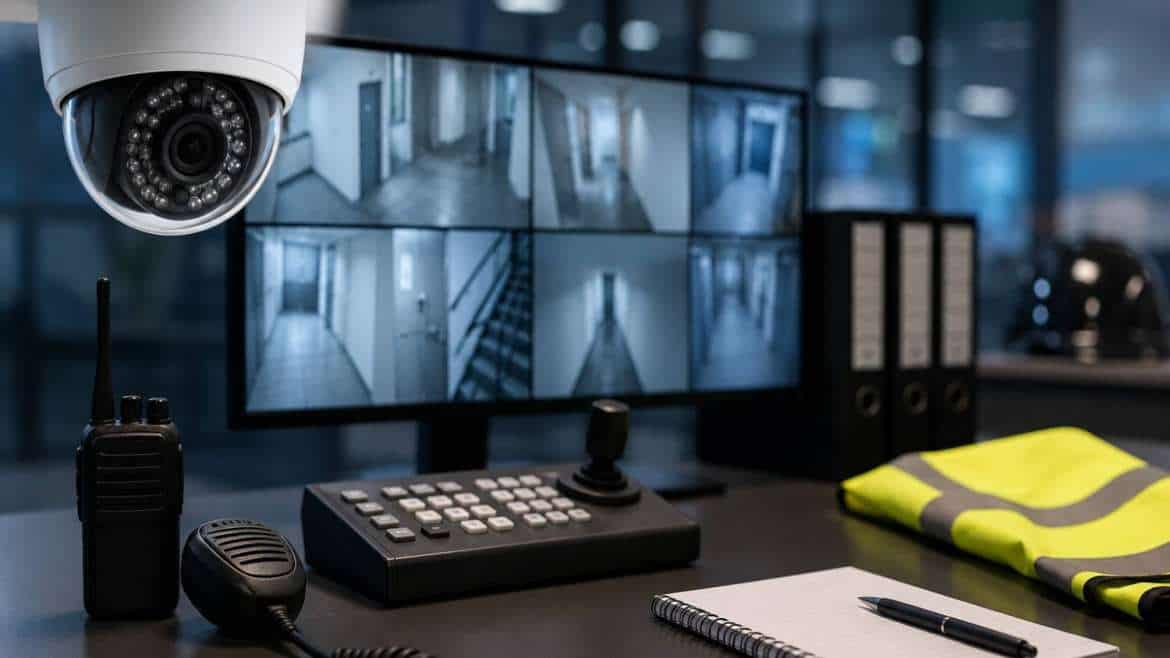
The private security sector in the UK is expanding rapidly, offering excellent career stability, competitive wages, and structured professional growth. Among the numerous paths available, working as a closed-circuit television (CCTV) operator is widely considered one of the most attractive options. Operating out of warm, secure, indoor control rooms, camera technicians act as the vital “eyes and ears” of public safety, helping local authorities, retail centers, corporate offices, and transport networks monitor operations and deter criminal activity.
To legally work as a public space surveillance operative in the UK, you must hold a valid front-line badge issued by the Security Industry Authority (SIA). Securing that credential requires completing an officially approved training program. If you are thinking about starting this new career path, you are probably wondering what you will actually be learning over the duration of your training. This guide details exactly what an SIA CCTV Security Course covers, breaking down the modules, assessments, and practical skills in simple, plain English to give you a clear roadmap to professional qualification.
What the Course Includes?
Before diving into the exact chapters, it helps to understand the physical setup of the training program:
- Course Duration: The training generally spans 3 days (encompassing roughly 22 to 27 hours of structured learning).
- Prerequisites: You must be 18 years or older, hold valid government identity documents, and possess a basic level of English literacy to follow the textbooks and sit the tests.
- Qualification Awarded: Successfully passing the program earns you a Level 2 Award for Working as a CCTV Operator (Public Space Surveillance) within the Private Security Industry.
Read More: How Difficult Is the SIA CCTV Security courses?
Principles of Working in the Private Security Industry
The first core component of a cctv and security system course is a foundational module that applies universally across the security sector. This unit ensures that every licensed operative understands the broader corporate, legal, and safety landscape of private security in the UK.
This comprehensive unit covers several main areas:
1. The Characteristics and Scope of the Industry
You will learn about the precise boundaries, purposes, and structures of the UK security industry, including how private contractors cooperate alongside local police forces to maintain public order and preserve safety.
2. Legal Awareness and Regulations
A major aspect of your training involves exploring the law. You will study the basic applications of civil law, criminal law, and the strict boundaries of citizen arrest procedures so you never breach legal boundaries while executing your duties.
3. Health, Safety, and Fire Procedures
Control room environments still carry operational workplace hazards. This chapter teaches you how to identify potential risks, follow emergency fire safety protocols, select appropriate firefighting tools, and execute proper emergency evacuation plans.
4. Communication and Record Keeping
Effective security relies heavily on clear communication. You will be trained in verbal and non-verbal communication skills, standard radio handling etiquettes, and how to write highly detailed, legally sound incident reports that can be used by corporate managers or the courts.
5. Managing Terror Threats and Safeguarding
Modern security operatives must understand national counter-terrorism protocols. You will learn how to identify suspicious behavior or items, respond to specific threat calls, and actively recognize and protect vulnerable people in public spaces.
Read More: How Security Training Courses Help You Build a Professional Career in the UK
Principles and Practices of Working as a CCTV Operator
Once the foundational principles are complete, your security cctv course shifts focus directly into the specialized mechanics of public space surveillance control rooms. This unit covers the precise daily operations, strict data protocols, and technical demands required of camera controllers.
Key chapters within this unit include:
1. Roles, Responsibilities, and Code of Conduct
You will explore the daily routine of an operative, the strict ethical codes you must maintain, and the standard operating procedures (SOPs) that govern professional control rooms.
2. Strict Legislation, GDPR, and Data Protection
Because tracking individuals impacts civil liberties, data management is highly regulated in the UK. This module focuses heavily on the Data Protection Act and the General Data Protection Regulation (GDPR). You will learn the exact legal steps for storing recorded footage, managing asset logs, and handling formal Freedom of Information requests securely without exposing your employer to catastrophic privacy fines.
3. CCTV Surveillance Techniques
You will dive deep into both proactive and reactive surveillance methods. Instructors will teach you how to scan large crowds effectively, identify suspicious patterns of behavior, track subjects smoothly across multiple screen networks, and monitor anti-social incidents without losing continuity.
4. Technical System Equipment
A core aspect of this cctv security system course involves breaking down how security tech functions. You will study various camera designs (such as Pan-Tilt-Zoom or PTZ cameras, fixed domes, and automatic number plate recognition systems), control room monitor configurations, video recording storage units, and networking infrastructure.
Read More: How Difficult Is the SIA CCTV Security Courses?
Practical Operation of CCTV Equipment
You cannot qualify as an operator simply by reading a textbook. The final component of your training involves hands-on interaction with physical camera equipment. Under the close supervision of an expert assessor, you will enter a simulated or live control station environment to demonstrate your technical competence.
During this practical module, you must successfully showcase your ability to:
- Conduct essential functional checks on screens and recording components to ensure the system is working flawlessly.
- Use physical hardware tools like joysticks, computer consoles, and control boards to actively target and track simulated subjects.
- Capture clear, high-quality images and export saved video clips that meet legal, evidential standards for police investigations.
- Maintain a precise, flawless audit trail in logbooks, recording every action you take in chronological order.
Read More: How to Choose Between SIA CCTV vs Door Supervisor Courses in the UK
How the Final Exams and Assessments Work
To successfully earn your Level 2 qualification, you must pass three distinct assessments on the final day of your course:
- Unit 1 Exam: A multiple-choice paper featuring 72 questions. You have 1 hour and 55 minutes to finish, and you must achieve a minimum score of 70% to pass.
- Unit 2 Exam: A multiple-choice paper containing 40 questions. You are given exactly 1 hour, with a standard pass mark set at 70%.
- Practical Assessment: A hands-on test where you execute a realistic surveillance scenario (typically lasting around 25 minutes). Because safety and legal compliance are vital, you must score a 100% pass mark on the practical checklist to qualify.
While a 100% pass mark on the practical module might sound intimidating, there is no need to worry. The scenario checklist simply covers standard operational steps that you will practice repeatedly throughout the duration of your training. Thanks to this highly accessible, step-by-step approach, the first-time pass rate for students across the UK sits at an outstanding 95%.
Final Thoughts
Ultimately, the SIA curriculum is carefully designed to take someone with zero prior experience and transform them into a highly capable, law-abiding, and tech-savvy surveillance specialist in just a few days. By covering everything from basic communication skills and strict data laws to live camera tracking techniques, this comprehensive qualification gives you all the tools required to launch a stable, well-paying career in the UK security industry.
At JFK Tech Training, we take the stress completely out of getting qualified. Our friendly, highly experienced UK instructors guide you seamlessly through every module of the SIA CCTV Security Course, providing clear explanations of data laws, interactive mock tests, and extensive hands-on practice with live camera systems. We ensure you feel completely prepared to pass your multiple-choice exams and practical assessments on your very first try. Contact JFK Tech Training today to explore our upcoming nationwide training dates, book your course space, and start your brand-new career path in security with confidence!
Frequently Asked Questions
The qualification covers three main modules: the foundational principles of working in the UK private security industry, the core operational practices of a public space surveillance camera operator, and a practical, hands-on module where you demonstrate your ability to use physical video surveillance equipment, joysticks, and system console logs.
To qualify, you must pass two multiple-choice theory exams and one practical camera scenario assessment. The first exam features 72 questions (110-minute time limit), the second contains 40 questions (60-minute time limit), and the practical test requires a 100% pass mark on basic operational checks and subject tracking.
Yes, absolutely. Because camera operators routinely track and capture footage of members of the public, data management is highly regulated under UK law. A significant portion of the course covers the Data Protection Act and GDPR, teaching you how to store footage legally and handle evidence trails safely.
The hands-on practical assessment typically lasts around 25 minutes. Under the supervision of an approved assessor, you will enter a simulated or live control station to perform standard equipment functionality checks, track targets using PTZ joystick tools, and complete an accurate, chronological audit logbook.
No, the course is highly accessible for beginners with zero prior tech experience. Because the modules focus heavily on real-world observation skills, practical common sense, and standard procedures rather than complex academic theory, approved training providers across the UK maintain a high first-time pass rate of around 95%.