
If you work as a site supervisor in the UK construction industry, you probably already know about the Site Supervision Safety Training Scheme (SSSTS). Your certificate is valid for five years. Before it runs out, you need to take an sssts refresher course and pass a short test. This keeps your qualification active for another five years.
Many people feel nervous before taking this exam. The good news is that it is not as hard as it sounds if you know what to expect. This article explains the test format, the topics it covers, common question types, and simple tips to help you pass with confidence.
What Is the SSSTS Refresher Course?
The sssts refresher training is a one-day course for supervisors who already hold an SSSTS certificate. It is shorter than the original two-day SSSTS course because it only refreshes your existing knowledge. It does not start from zero.
The course updates you on current health, safety, welfare, and environmental rules used on construction sites. It also covers changes in law and industry guidance since you last took the course. Topics usually include CDM (Construction Design and Management) updates, risk assessments, method statements, supervising safe work, and leadership in site safety.
You must attend the full training day, since trainers assess you throughout the course, not just during the final test. If you have a busy schedule or prefer studying from home, you can also look into an sssts refresher course online, which covers the exact same material in a digital classroom environment.
What Does the Test Look Like?
The exact format can vary slightly between training providers whether you attend an sssts refresher course in london classroom or an sssts refresher course in essex facility but the general pattern used by CITB (Construction Industry Training Board) approved centres is fairly consistent.
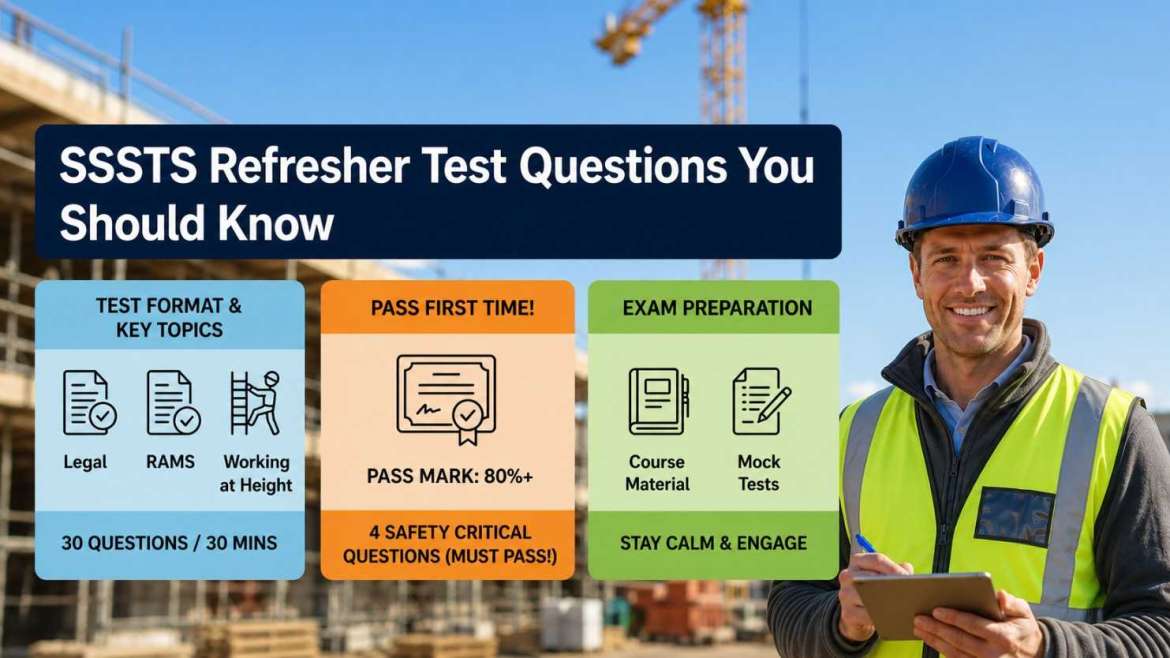
- The test usually has around 22 to 25 multiple-choice questions.
- There are also a few short written questions.
- The whole test lasts about 30 minutes.
- You are allowed to use your official CITB course book during the last part of the test, usually the final 10 minutes.
- The pass mark is normally 80 percent.
- A small number of questions, often four, are called “safety critical” questions. You must get all of these correct to pass, even if your overall score is high enough.
This last point matters a lot. Do not rush through the safety critical questions. Read each one twice before answering.
Read More: CITB SSSTS Course: Become a Safer, More Confident Site Supervisor
Why Are Some Questions “Safety Critical”?
Safety critical questions test knowledge that could directly prevent serious injury or death on a construction site. Examples include things like:
- Basic legal duties of a supervisor under health and safety law
- What to do first when you notice a dangerous situation
- How to respond to specific site hazards, such as working at height or near excavations
- Emergency procedures
Because these topics protect lives, training providers do not allow a pass unless you answer them correctly. This is not designed to trick you. It simply confirms that you understand the most important safety principles before you go back to supervising a live site.
Read More: How to Renew Your SSSTS Certificate in the UK
Common Topics Covered in the Test
While the exact wording of sssts refresher test questions changes between test papers, they generally draw from a consistent set of subject areas. Here is what you should revise before your refresher day:
- Health and Safety Law: Expect questions about your legal responsibilities as a supervisor, including duties under the Health and Safety at Work Act and CDM Regulations. You may be asked to identify who holds which duty on a site, such as the principal contractor, the client, or the supervisor.
- Risk Assessments and Method Statements: You should know why risk assessments exist, how they link to method statements, and how to communicate this information to your team through briefings such as toolbox talks.
- Accident and Incident Reporting: Questions often test whether you know when and how to report accidents, near misses, and dangerous occurrences, including basic knowledge of RIDDOR reporting rules.
- Welfare Facilities: You may be asked what welfare facilities a site must provide, such as toilets, washing areas, and rest areas, and how these support worker wellbeing.
- Working at Height: This remains one of the most common causes of serious site injuries, so expect at least one question on safe systems of work for working at height, including the hierarchy of control measures.
- Excavations and Confined Spaces: Some tests include questions on the specific hazards of excavation work and confined spaces, along with the precautions supervisors should put in place.
- PPE (Personal Protective Equipment): You should understand when PPE is required, how it fits into the overall safety hierarchy, and that it is a last resort rather than a first line of defence.
- Fire Safety: Basic fire safety knowledge is often tested, including fire prevention measures and evacuation procedures on a live site.
- Environmental Awareness: Because the refresher includes environmental content, questions may cover waste management, pollution prevention, and a supervisor’s responsibility to reduce environmental harm on site.
- Leadership and Supervision: Some questions focus on soft skills, such as how a supervisor should communicate safety expectations to a team, handle non-compliance, and lead by example.
Sample Style of Questions
Real test questions cannot be shared here, since providers keep their exact papers private and change them regularly. However, questions are generally written in a straightforward multiple-choice format, such as:
“Who has overall responsibility for health and safety on a construction site?”
“What should a supervisor do first if they see an unsafe act?”
“Which of the following is NOT a legal duty of a site supervisor?”
Notice that the questions are practical rather than academic. They test whether you would make the right call in a real site situation, not whether you have memorised a textbook.
Tips to Prepare for the SSSTS Refresher Test
- Attend the full training day and stay engaged. Trainers often highlight exactly what the test will focus on during sssts refresher training courses.
- Review your original SSSTS course notes. Refresher content builds on what you learned before, so old notes are still useful.
- Practice with an sssts refresher mock test. Several training providers offer free mock tests online. These will not match the real questions exactly, but they help you get used to the format and timing.
- Read every question twice, especially the safety critical ones. Simple misreading is one of the most common reasons people lose marks.
- Use your course book wisely during the allowed period. Know its structure in advance so you can find information quickly instead of searching under time pressure.
- Manage your time. With around 30 minutes for the whole test, do not spend too long on one question. Move on and come back if needed.
- Stay calm. The refresher test is designed to confirm existing knowledge, not to catch you out. If you attended the course and paid attention, you already have what you need.
What Happens After the Test?
If you pass, your SSSTS certificate is renewed for another five years. Certificates today are usually issued digitally rather than as physical cards, and they are typically sent to whoever booked the course within a few weeks.
If you do not pass, most providers allow a resit on the same day using a different set of test questions. If that resit is unsuccessful, you will usually need to book the full SSSTS course again rather than just the refresher.
Final Thoughts
The SSSTS Refresher test is designed to check that supervisors remain up to date on essential safety knowledge, not to make renewal difficult. If you attend the full training day, revise your original course material, and pay close attention to the safety critical topics like working at height and legal responsibilities, you are well placed to pass with confidence.
Keeping your SSSTS certificate current is not just about ticking a box. It reflects your ongoing commitment to keeping yourself and your team safe on site.
Ready to renew your qualification? Book your upcoming course with JKF Tech Training today to secure your certification for another five years.
Frequently Asked Questions
If you fail even a single safety critical question, you will fail the entire test, regardless of how high your overall score is. These specific questions cover life-saving site rules, which is why getting them 100% correct is a mandatory requirement to pass.
You can choose whichever method fits your schedule best. Both options cover the exact same CITB-approved curriculum. Online courses are delivered via live, tutor-led video software, while classroom courses are held at physical training facilities.
If you fail the initial test but score above a certain minimum standard, most providers allow you to take a same-day rest using a completely different exam paper. However, if you fail the resit, you will be required to book and attend the full, original course over again.
No, there is absolutely no grace period. Your SSSTS Refresher course must be attended, and the exam passed, before the exact expiry date printed on your current certificate. If your certificate expires by even one day, you lose eligibility for the refresher and must retake the full two-day course.
The official pass mark is 80%. The test consists of 30 total marks (made up of 22 multiple-choice options and 3 short written-answer questions), meaning you must score at least 24 marks while successfully answering all safety critical questions to pass.